
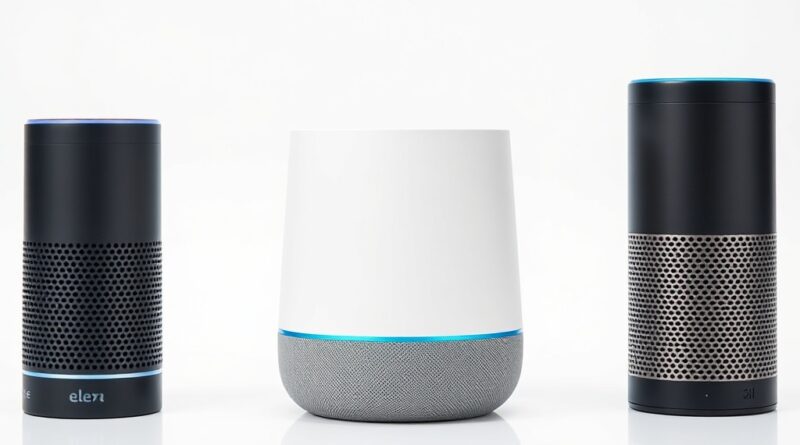
Smart Speakers Showdown: Alexa vs Google Assistant vs Siri in 2026
Introduction
In the rapidly evolving world of smart technology, choosing the right voice assistant can transform your home into a hub of convenience and ease. With numerous options available, the question arises: which smart speaker is best suited for your lifestyle? In this review, we’ll dissect three of the leading players in the market: Amazon Alexa, Google Assistant, and Apple Siri. By the end, you’ll have a clear understanding of which smart speaker is the right fit for you.
Key Features and Specs
Amazon Alexa
- Smart Home Control: Alexa excels in managing smart home devices, providing a seamless experience for users with various compatible devices.
- Third-party Support: With a vast library of skills and compatibility, Alexa supports numerous smart devices, making it easy to integrate into existing home setups.
- Routine Creation: Users can create routines that allow for multiple actions with a single command, adding to the programmable ease.
- Privacy Features: While there are some concerns about privacy, Alexa offers users the ability to manage their voice recordings and data settings.
Google Assistant
- Search Capabilities: Google Assistant is renowned for providing accurate internet answers, thanks to its powerful search engine backing.
- Scheduling and Reminders: Users report that scheduling tasks and setting reminders are notably smooth and efficient.
- Conversational AI: The recent transition to Gemini AI enhances the conversational abilities of Google Assistant, making interactions feel more natural.
- Device Compatibility: While slightly limited compared to Alexa, Google Assistant devices perform exceptionally well when networked together.
Apple Siri
- Speed: Siri is known for its fast response times, handling voice commands swiftly.
- Apple Ecosystem: For users deeply entrenched in the Apple ecosystem, Siri offers seamless integration across devices.
- Privacy Focus: Apple’s commitment to privacy ensures that user data is protected, although this can lead to limited functionality in terms of data access.
- Third-party Support: While Siri supports fewer devices than Alexa, it is compatible with many major brands.
Pros and Cons
Amazon Alexa
Pros:
- Exceptional smart home control capabilities.
- Extensive third-party device support.
- Robust routine customization options.
Cons:
- Privacy concerns around data collection.
- Can be overwhelming due to the sheer number of available skills.
Google Assistant
Pros:
- Outstanding search and information retrieval capabilities.
- Smooth and efficient scheduling tools.
- Conversational interactions with the Gemini AI upgrade.
Cons:
- Fewer compatible devices compared to Alexa.
- Multi-device networking can be hindered if not set up properly.
Apple Siri
Pros:
- Fast and responsive performance.
- Strong privacy and data protection.
- Seamless integration within the Apple ecosystem.
Cons:
- Limited capabilities outside the Apple product line.
- Less comprehensive data access compared to Google Assistant and Alexa.
Real-World Usage Scenarios
Amazon Alexa
In a typical scenario, an individual using Amazon Alexa might rely on the assistant to manage a multitude of smart home gadgets. From turning off the lights to adjusting the thermostat and even playing music across various speakers, Alexa’s compatibility makes it a favored choice for smart home enthusiasts. Additionally, with the ability to set reminders for appointments and daily tasks, users report heightened productivity in their everyday lives.
Google Assistant
On the other hand, users of Google Assistant often praise its ability to pull accurate information quickly. For instance, a user can ask, “What’s the weather today?” and receive not only the current temperature but also a detailed forecast for the week ahead. Additionally, scheduling appointments and setting reminders through Google Assistant is relatively straightforward, allowing for organized management of daily tasks.
Apple Siri
For individuals embedded within the Apple ecosystem, Siri serves as an excellent assistant. Users can send messages, make calls, and control smart devices all through quick voice commands. The onboarding process is also notably fast, and Siri’s responsiveness often impresses users. However, some users may find standing alone in terms of smart home automation less appealing, depending on how integrated their household is.
Price Comparison
Budget Tier
Devices in this tier usually offer a basic level of smart assistance.
- Amazon Echo Dot: Typically priced around $50, this speaker provides access to Alexa’s extensive capabilities.
- Google Nest Mini: Similarly priced around $50, it offers access to Google Assistant, with a strong focus on audio quality for its size.
- Apple HomePod Mini: This compact option generally retails around $100, emphasizing an Apple-centric experience.
Mid Tier
These smart speakers usually come with enhanced features and audio quality.
- Amazon Echo (4th Gen): Frequently found around $100, it offers a stronger speaker experience alongside Alexa’s features.
- Google Nest Audio: Priced similarly at around $100, it aims to deliver rich sound quality while maintaining Google Assistant functionality.
- Apple HomePod: Typically costing around $300, this option caters to audiophiles who appreciate high-quality sound combined with Siri’s capabilities.
Premium Tier
Premium speakers offer extraordinary audio quality and advanced features.
- Amazon Echo Show 10: At around $250, this device combines a smart display with Alexa, enabling video calls and entertainment options.
- Google Nest Hub Max: Similarly priced at around $300, it serves as a smart display, perfect for managing smart home devices and providing video content.
- Apple HomePod Mini: Around $100, it emphasizes premium sound in a small package, although the standard HomePod offers better quality without Siri limitations.
Verdict and Recommendations
Choosing the right smart speaker ultimately depends on your preferences and existing ecosystem. If you’re looking for unparalleled smart home control, Alexa stands out as your best option, especially if you have a range of compatible devices. On the other hand, if your priority is receiving fast, accurate answers and you appreciate a more conversational interaction, Google Assistant is hard to beat, particularly with its Gemini AI implications.
For Apple users, Siri provides a quick and effective tool for managing tasks and controlling smart devices but may fall short in wider smart home integrations and data access. In light of the current market trends and user feedback, we recommend evaluating your specific needs before making a choice.
In conclusion, whether you lean towards Amazon, Google, or Apple, each assistant has strengths and weaknesses worth considering. It’s essential to align your choice with both your technological infrastructure and personal requirements to ensure you get the most value for your money.
Disclosure: This post contains affiliate links. We may earn a commission at no extra cost to you. | Hinweis: Dieser Beitrag enthält Affiliate-Links. | Nota: Questo post contiene link affiliati.